
Preparation Creates Speed: The Hidden Advantage of Proactive Leaders

“The Real Victory Happens Before the Finish Line”
June 30, 2026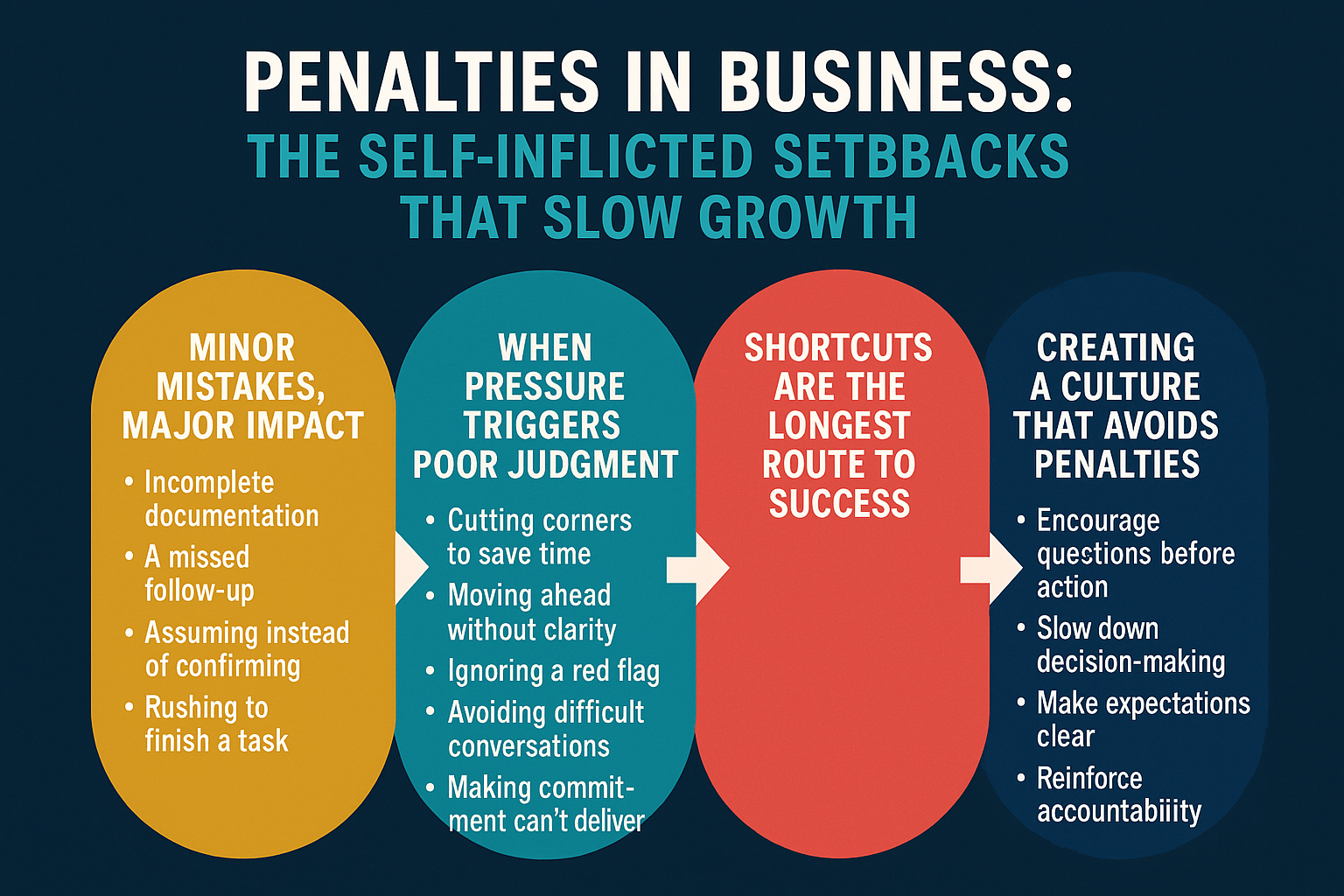
Penalties in Business: How Small Missteps Create Big Detours
July 16, 2026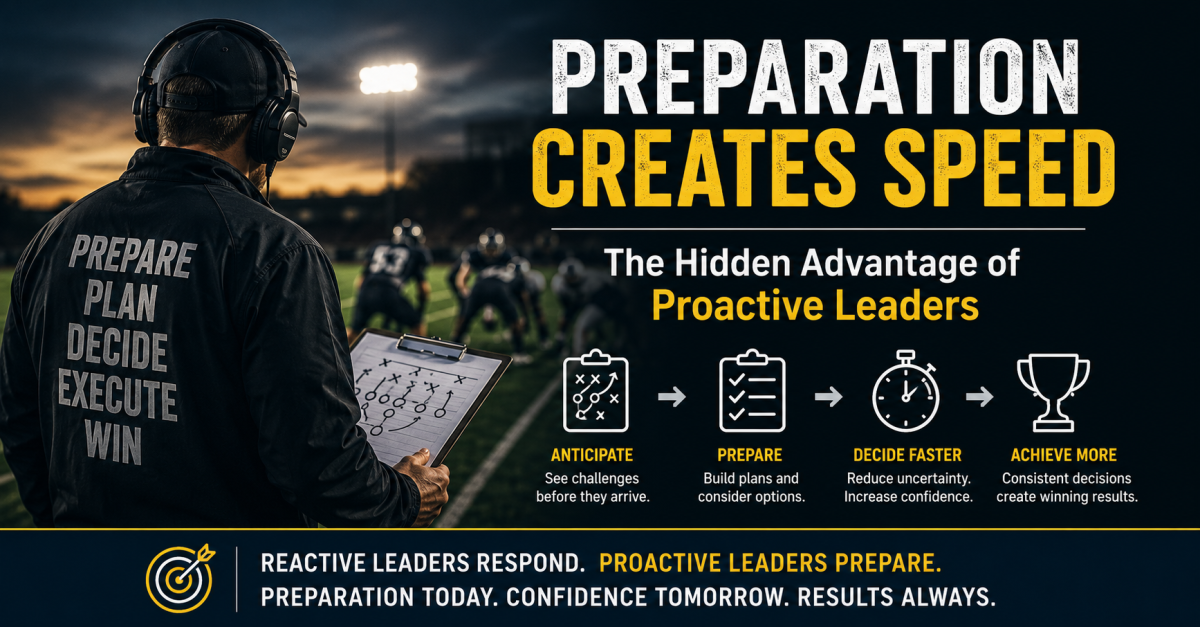
Many business leaders believe the best decision makers are simply quicker thinkers.
In reality, the leaders who consistently make better decisions are rarely making them on the spot. They made many of those decisions long before the situation appeared.
The difference is preparation.
Organizations often find themselves operating in a constant state of reaction. Problems arise, deadlines appear, customers change direction, markets shift, and competitors make unexpected moves. Leaders are forced to respond quickly, often with incomplete information and mounting pressure.
Over time, this reactive cycle becomes exhausting. Teams spend their days putting out fires instead of building systems that prevent them.
The challenge is not usually intelligence or effort.
The challenge is preparation.
In football, a team has only a short amount of time to call the next play. Coaches do not gather for a lengthy meeting after every down. They do not begin evaluating every possible option from scratch. They have already studied the opponent, practiced various scenarios, and prepared multiple responses before the game ever began.
When the moment arrives, they simply execute.
Business operates much the same way.
The leaders who make the best decisions are not necessarily the smartest people in the room. They are often the most prepared. They have anticipated obstacles, identified opportunities, established priorities, and considered possible outcomes before a decision becomes urgent.
As a result, they move faster.
Preparation reduces uncertainty.
Preparation creates confidence.
Preparation shortens the time between recognizing a problem and implementing a solution.
This is one of the greatest differences between reactive organizations and proactive organizations.
Reactive organizations wait until a challenge appears before beginning to think about it.
Proactive organizations think about challenges before they arrive.
When a customer leaves, the reactive company scrambles to replace revenue. The proactive company already has a business development plan in place.
When cash flow tightens, the reactive company begins searching for financing. The proactive company already understands its funding options and lender requirements.
When operational problems emerge, the reactive company starts assigning blame. The proactive company already has systems, accountability, and contingency plans established.
The situations may be similar.
The outcomes are dramatically different.
Many leaders mistakenly believe that success is determined by making one great decision. In reality, success is usually the result of making a series of smaller decisions correctly and consistently over time.
Every day presents new opportunities to advance toward your goals. A conversation with a client, a hiring decision, an investment of time or capital, a team meeting, or an unexpected challenge all require decisions that influence future outcomes. While these moments may seem independent of one another, they are connected by the preparation that occurred beforehand.
The quality of a decision is rarely determined at the moment it is made. More often, it is determined by the thinking, planning, and preparation that took place long before the decision was required.
The organizations that consistently outperform their competitors are not simply reacting better. They are preparing better.
They understand where they are going. They know what success looks like. They have thought through the obstacles that may stand in their way. Because of that preparation, they can make decisions with greater speed and greater confidence.
The ability to move quickly is not a competitive advantage.
The ability to move quickly because you are prepared is.
In today’s business environment, opportunities often belong to the organizations that can make informed decisions before everyone else. Preparation allows leaders to recognize opportunities sooner, respond to challenges faster, and maintain momentum while others are still trying to determine their next move.
The next time you find yourself facing a difficult decision, ask a simple question:
Am I struggling with the decision itself, or am I struggling because I wasn’t prepared for the moment when the decision needed to be made?
The answer may reveal the difference between operating reactively and leading proactively.
This blog post draws on the insights from the eleventh chapter, “Play Calling -The Next Step” “, of my book “First and Ten on the Twenty…is it Football, Business or Life?”, where twenty-four aspects of the business and game of football are explored in depth on how they can be applied to business and life. For more on strategic planning and achieving business excellence, delve into the full text and discover how to apply these principles. https://toddsmithconsulting.com/author/