
Penalties in Business: How Small Missteps Create Big Detours

Preparation Creates Speed: The Hidden Advantage of Proactive Leaders
July 6, 2026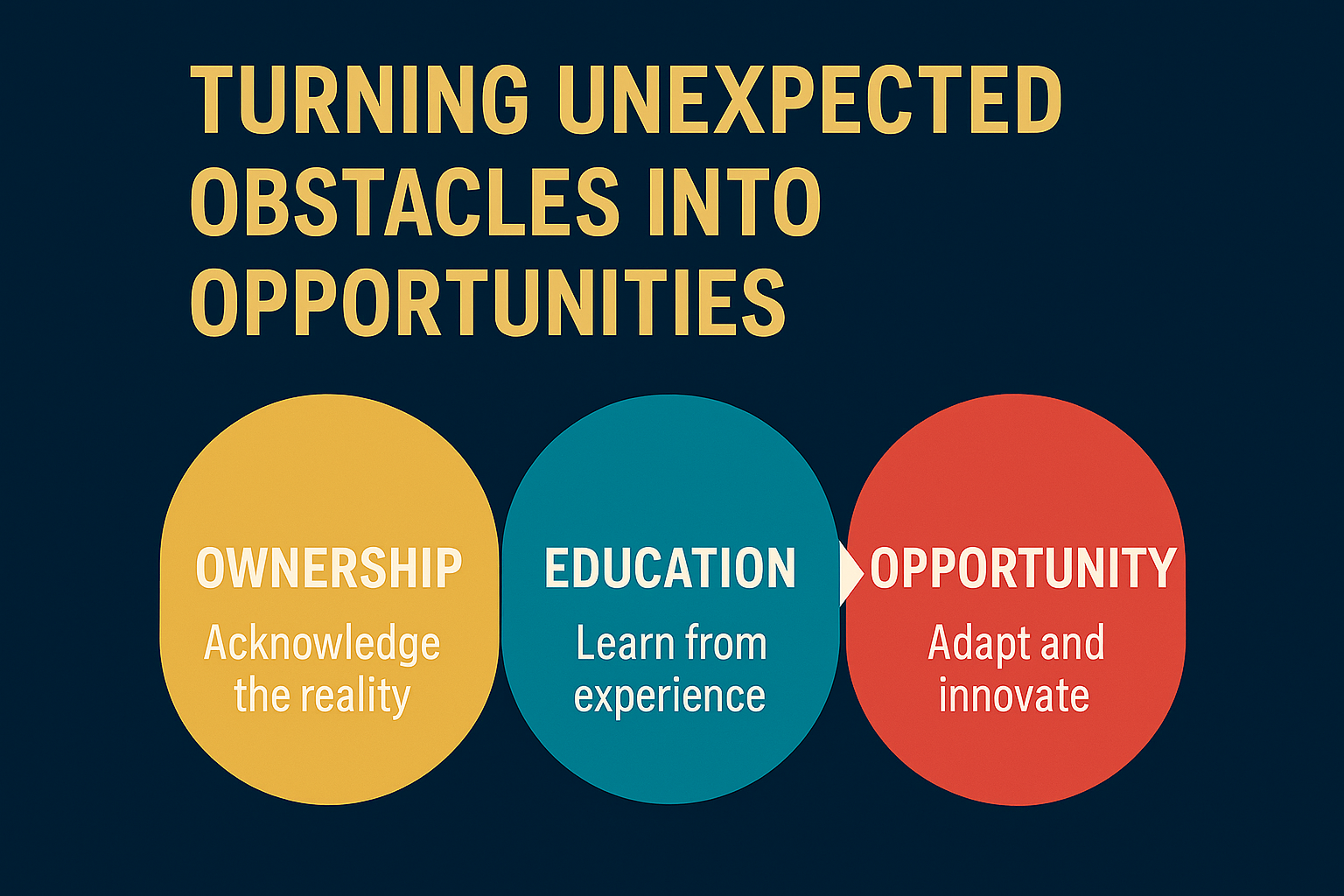
When the Plan Breaks Down: How Leaders Turn Disruption Into Advantage
July 22, 2026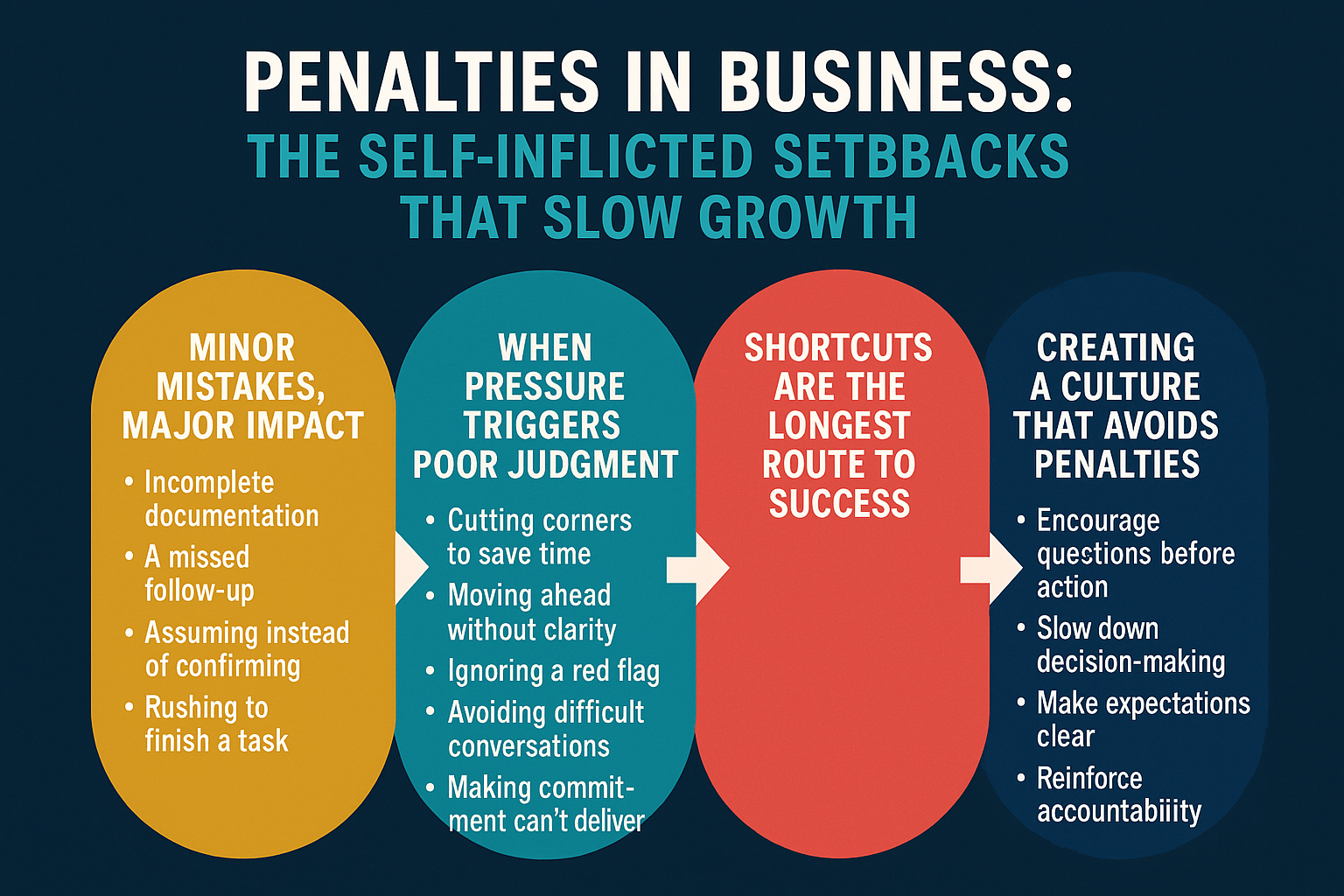
In football, penalties do not just cost yards—they disrupt rhythm, derail strategy, and force a team to work harder to get back to the original line of progress. Business operates the same way. Most setbacks are not caused by market forces or competitors. They come from avoidable, internal missteps: overlooked details, rushed decisions, ignored processes, or shortcuts that seemed harmless in the moment.
What makes penalties so costly isn’t the mistake itself—it’s the ripple effect that follows.
The Hidden Cost of “Only Five Yards”
In football, a simple five-yard penalty can turn a manageable third-and-one into a third-and-six, changing the entire play call. In business, “minor” infractions work the same way:
- A missed email response
- A small billing error
- A delayed deliverable
- A careless internal message
- A poorly handled conversation
Individually, these seem insignificant. But for customers, partners, and employees, they can mark the beginning of doubt. And once doubt starts, momentum shifts.
The danger lies not in the size of the mistake, but in the distance it pushes you away from the relationship you were building.
The High-Yardage Penalties: When Pressure Overrides Principles
Every business faces moments where urgency, emotion, or ambition tempt good people to make questionable choices. Whether it’s:
- Cutting a compliance corner
- Overpromising to win business
- Avoiding a difficult conversation
- Stretching a fact to secure an approval
- Ignoring a known issue to “keep things moving”
These moments feel small in isolation—but they carry “15-yard consequences.”
Once a pattern of shortcuts forms, it becomes a culture.
And culture is where penalties either multiply… or disappear.
Why Penalties Escalate: Someone Else Always Has to Fix Them
One of the core ideas from the chapter, Penalties in the book “First and Ten on the Twenty…Is It Football, Business or Life?” is that the person who commits the penalty is rarely the one who corrects it. In football, an off-sides call forces the coach to change the play. In business:
- Leadership gets pulled into customer recovery
- Legal teams get involved unnecessarily
- Operations must scramble to fix preventable issues
- Finance steps in to explain errors that shouldn’t have happened
Correcting an error always takes more time, energy, and resources than preventing it.
This is why high-performing businesses focus relentlessly on the fundamentals—clear communication, consistent processes, high standards, and accountability that doesn’t wait for a crisis.
Eliminating Penalties Before They Happen
Most business penalties come from one of three causes:
1. Lack of clarity
Unclear direction, ambiguous expectations, or missing information lead people to guess—and guesses lead to errors.
2. Emotional decision-making
Just like a defender who hits the quarterback a step too late, frustration, excitement, pressure, or urgency often override judgment.
3. Shortcuts disguised as efficiency
A shortcut today becomes a setback tomorrow. And the “fix” almost always takes longer than doing it correctly in the first place.
High-performing companies reduce penalties not by being perfect, but by:
- Encouraging questions before action
- Making the correct choice easier than the fast choice
- Creating a culture where details matter
- Removing the fear of speaking up
- Teaching that integrity is not situational
Mistakes Are Inevitable—Escalation Is Optional
A penalty doesn’t define a team—its response does.
In business, the fastest way to rebuild trust is simple:
- Acknowledge it honestly
- Correct it quickly
- Communicate transparently
- Learn from it systematically
The most significant erosion of trust comes not from the error but from the avoidance, defensiveness, or confusion that follows.
A business that owns its mistakes is seen as reliable.
A business that hides them is seen as risky.
The Business Advantage: Time to Think Before Acting
Unlike football, where decisions must be made in seconds, business gives us the benefit of perspective. That’s a competitive edge—if we choose to use it.
Before sending the email, approving the deal, responding to the complaint, or making the judgment call, there is always a moment to pause and ask:
- “Is this the right action or the fast action?”
- “Does this align with our standards?”
- “Would I be comfortable if this decision became public?”
A single second of reflection prevents hours—or months—of correction.
Final Thought
Every business will face penalties. The real goal is to reduce how many are self-inflicted. When teams operate with clarity, integrity, and discipline, mistakes become teachable moments rather than turning points.
So here’s the question that drives stronger teams and stronger companies:
What small penalty in your business, if eliminated consistently, would create the biggest positive shift in performance?
This blog post draws on the insights from the fifteenth chapter, “Penalties”, of my book “First and Ten on the Twenty…is it Football, Business or Life?”, where twenty-four aspects of the business and game of football are explored in depth on how they can be applied to business and life. For more on strategic planning and achieving business excellence, delve into the full text and discover how to apply these principles. https://toddsmithconsulting.com/author/
If you would like a more in-depth personal discussion on how this concept could benefit you career or business, feel welcome to contact me at tsmith@toddsmithconsulting.com, or PM me