
PREPARATION DRIVEN BUSINESS BRIEF™ #6 -Why Do Emergencies Dominate Our Day?

PREPARATION DRIVEN BUSINESS BRIEF™ #8 – Why Does the Organization Seem Stuck in Survival Mode?
October 8, 2026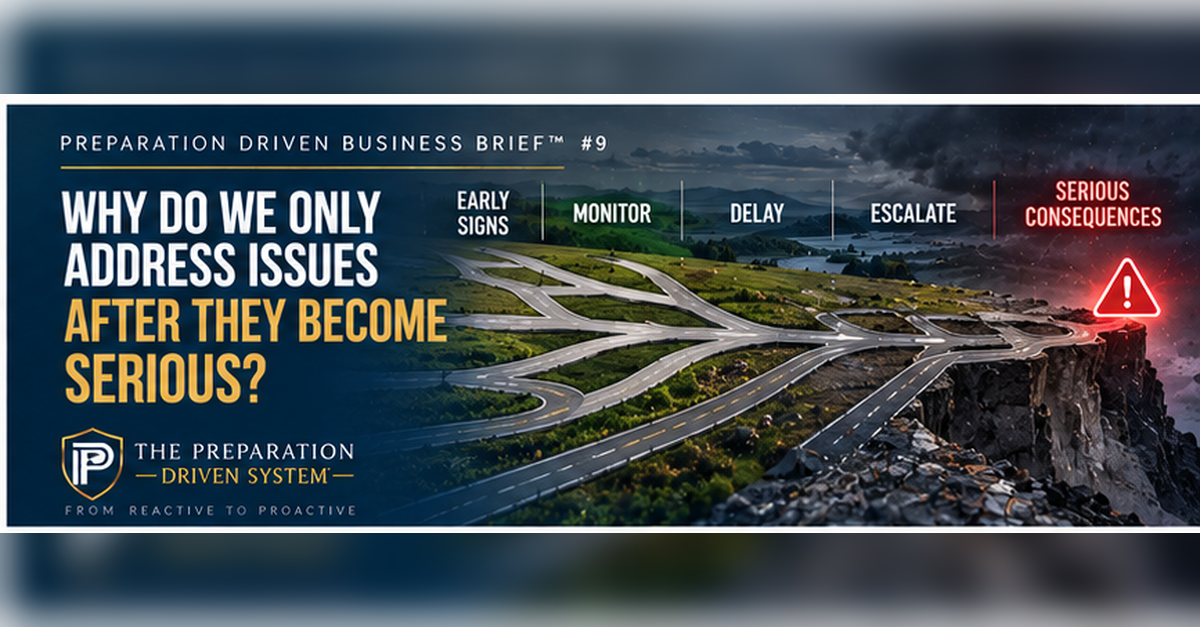
PREPARATION DRIVEN BUSINESS BRIEF™ #9 – Why Do We Only Address Issues After They Become Serious?
October 9, 2026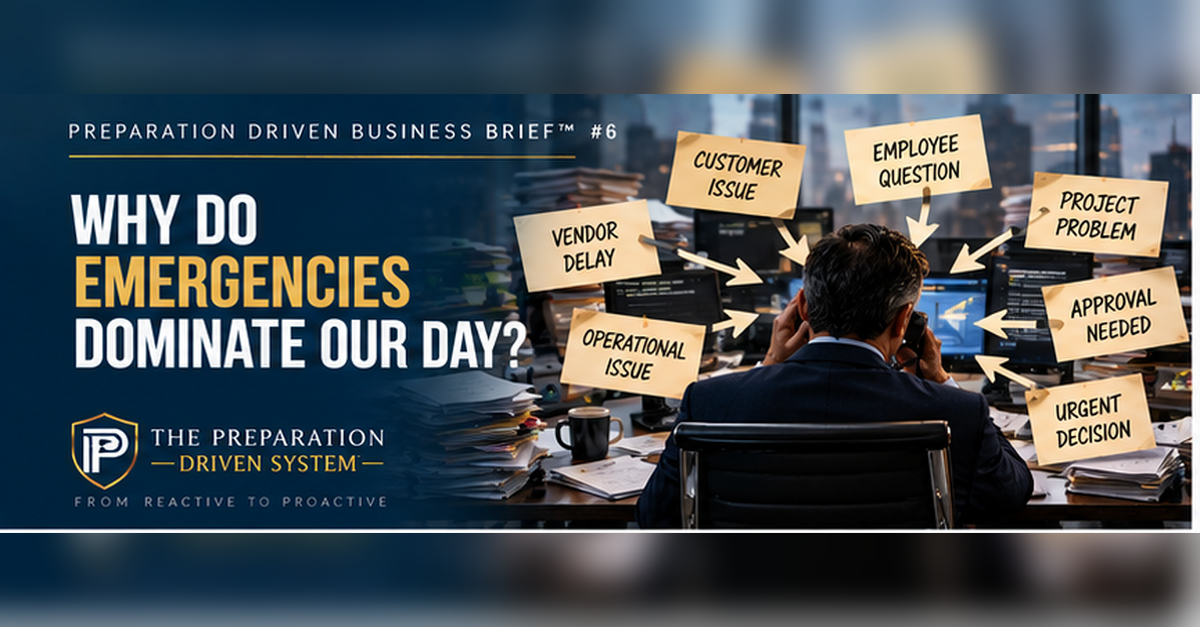
Why Do Emergencies Dominate Our Day?
Observation
The day begins with priorities. Then the phone rings.
A customer needs immediate attention. An employee needs a decision. A project encounters a problem. Someone is waiting for an approval. Another department needs information. By midmorning, the day’s priorities have been replaced by everyone else’s emergencies.
This pattern is often blamed on a fast-moving business environment. But when emergencies routinely travel upward or across the organization looking for someone to resolve them, the problem may not be the number of emergencies.
The organization may never have determined which situations should be handled where, by whom, and under what circumstances.
Without that preparation, everything unusual feels urgent—and everything urgent competes for leadership attention.
Business Impact
When emergencies dominate the day, important work repeatedly loses to immediate work.
Leaders postpone planning. Managers interrupt one another. Employees wait for answers. Customers receive inconsistent responses depending upon who becomes involved. Projects lose momentum because people are repeatedly pulled away from planned responsibilities.
Eventually, senior leaders can become the organization’s emergency room—the place where every difficult situation is sent for treatment.
That creates another consequence. When employees learn that unusual situations will ultimately be handled above them, they have less reason to develop the judgment and confidence necessary to handle those situations themselves.
Leadership becomes busier while the organization becomes increasingly dependent upon leadership.
How The Preparation Driven System™ Addresses It
The Preparation Driven System™, created by Todd Smith, approaches emergencies before they become interruptions.
Not every situation can be anticipated, but categories of situations frequently can.
Preparation-driven leaders ask: What decisions repeatedly interrupt managers? Which customer issues consistently escalate? What exceptions occur often enough that they should no longer be treated as exceptions? Who should have authority to act? What information or criteria would allow that person to make a sound decision?
The objective isn’t to create a rule for every possible circumstance. Excessive rules can create their own problems.
The objective is to prepare people to recognize what they can handle, what requires escalation, and what information should accompany the issue when escalation is necessary.
When that clarity exists, leadership doesn’t disappear from difficult situations.
Leadership becomes involved where leadership is actually required.
Preparation Principle #6
If everything unusual becomes an emergency, the organization has not prepared people to distinguish an exception from an escalation.
The Question
Look at the emergencies that reached your leadership team during the past month. How many truly required senior leadership—and how many arrived there because nobody else was prepared or authorized to act?
Todd Smith
Creator, From Reactive to Proactive -The Preparation Driven Performance System™